
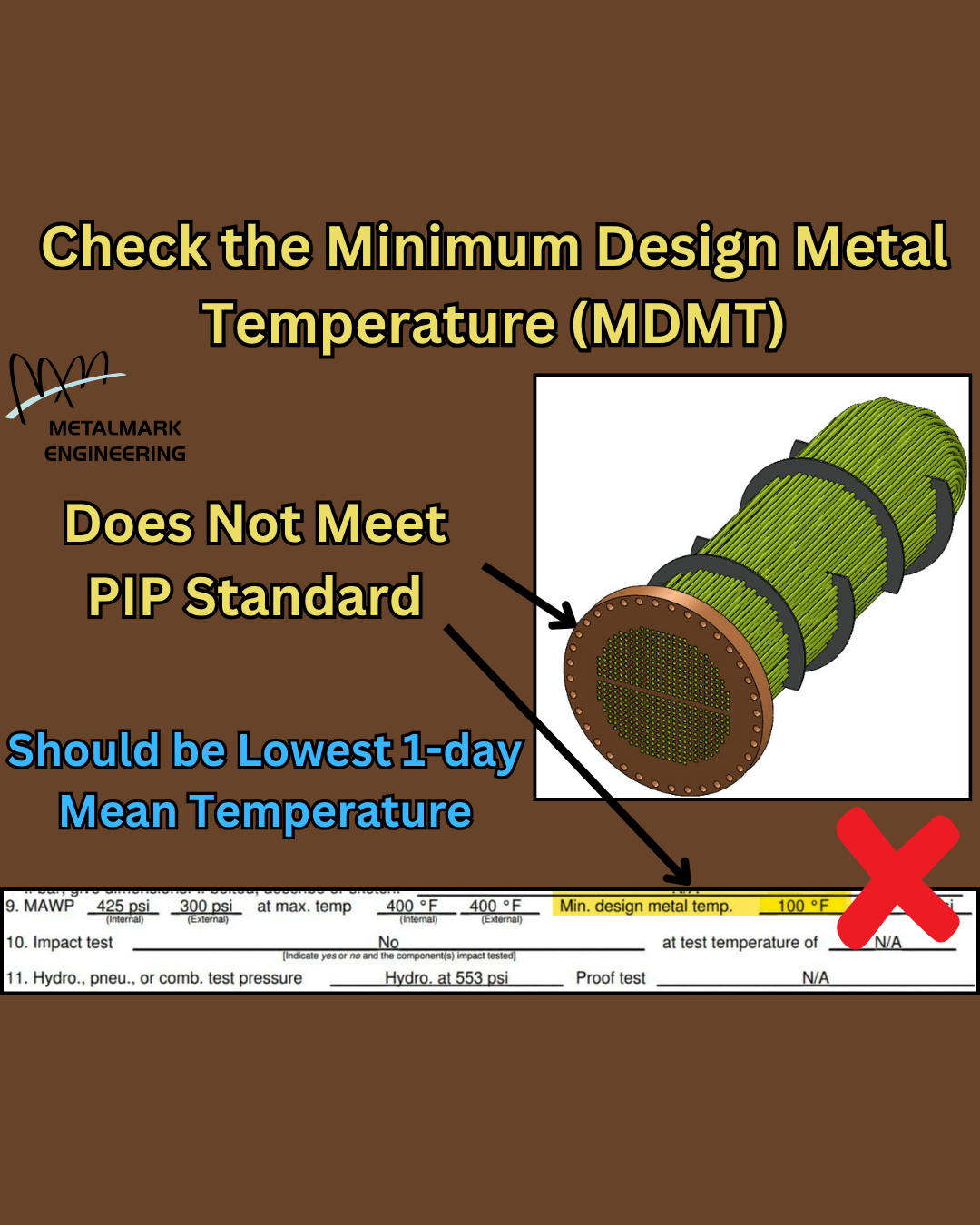
Meet MDMT Per PIP Standards
Please start checking the Minimum Design Metal Temperature (MDMT) of the equipment in your facility. It may not meet Process Industry Practices (PIP)!
One of my favorite parts about reviewing the U-forms for creating Corrosion Control Documents (CCDs) is documenting the equipment with brittle fracture risk due to ridiculously high MDMTs. I’ve found that many procurement departments, even at large facilities and refineries, do not check the MDMT before accepting equipment. This is a major risk that should be addressed.
The ASME Code is clear about minimum temperature requirements and PIP VECV1001 provides further guidance on how to determine the minimum temperature that your equipment needs to meet.
Located in the Gulf? An MDMT as high as 20°F (-7°C) may be acceptable.
Located in Alberta? An MDMT as low as -30°F (-34°C) should be maintained.
No equipment should have an MDMT above 45°F (7°C) in North America.
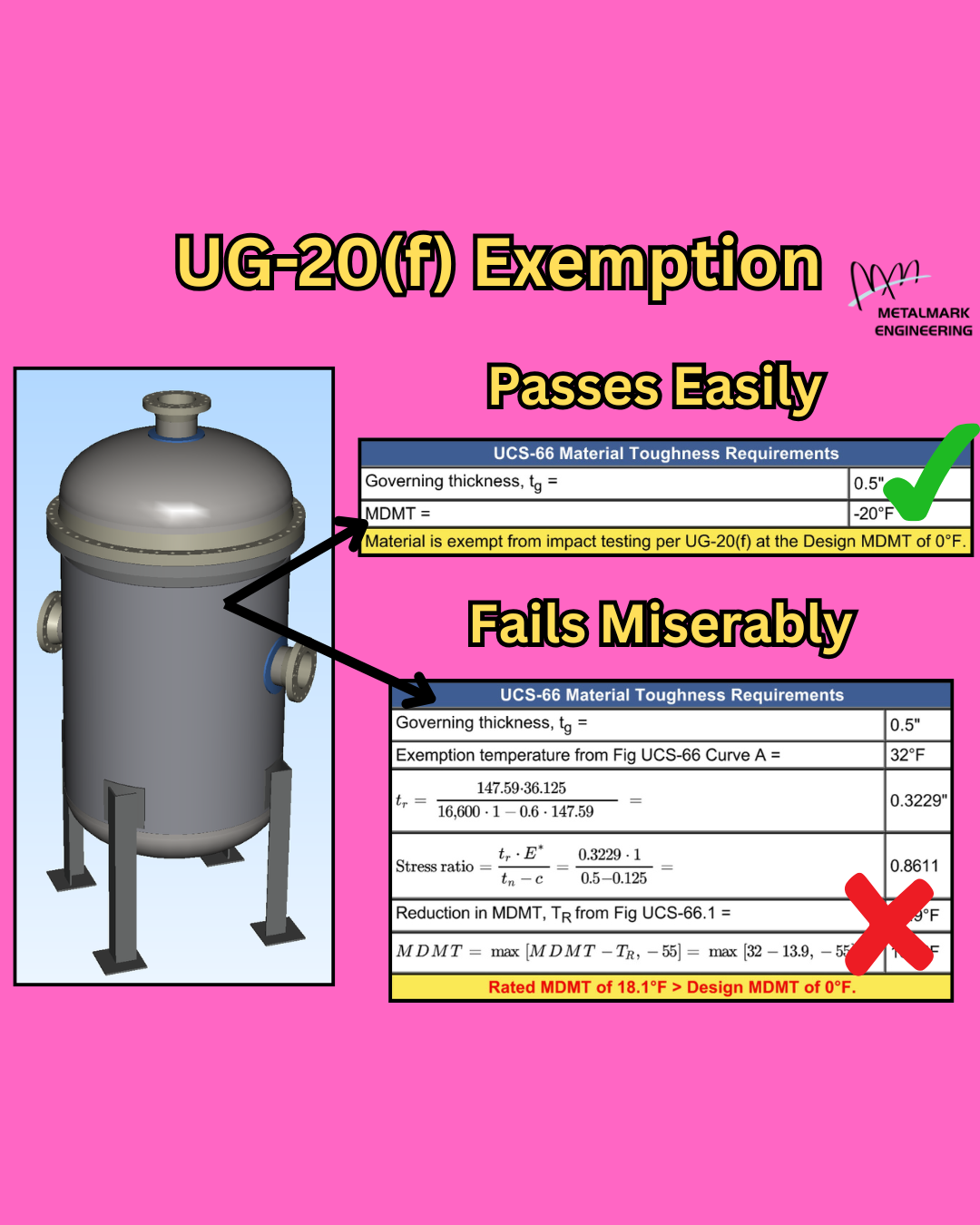
UG-20(f) Exemption
A client called me with a specification sheet with a “No UG-20(f) exemptions” line and asked: “What does that mean?”.
UG-20(f) is an automatic impact test exemption based on material thickness. Not allowing this exemption means that the component Minimum Design Metal Temperature (MDMT) must be calculated in cases where the material thickness would normally fall into this exemption.
In practical terms UCS-66 Curve A materials, like SA-36 plate, are probably not going to meet the specification sheet MDMT requirements without this exemption. A material upgrade may be necessary!
Don’t let MDMT calculations be the reason for your calculations to be rejected! The team at Turnaround EPC specializes in ensuring your equipment meets the required specification sheet MDMT.
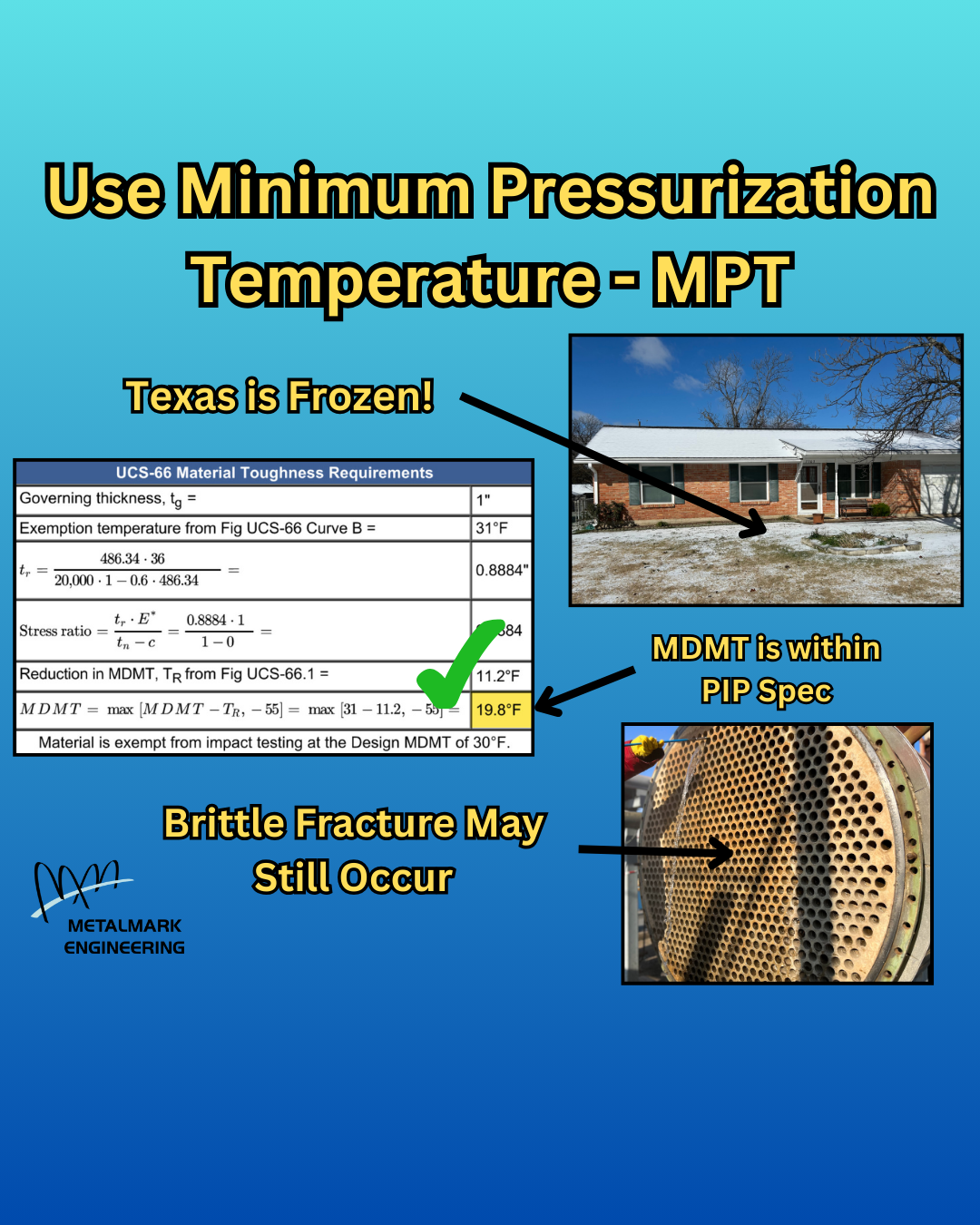
Use Minimum Pressurization Temperature (MPT)
Did you shut down during the ice storm? If so please check the Minimum Pressurization Temperature (MPT) before starting your equipment back up!
This is especially true for heat exchangers with thick carbon steel tubesheets.
I’ve seen many carbon steel tubesheets crack after ice storms. The tubesheets did not fracture during the storm itself. The tubesheets experienced brittle fracture when the heat exchanger was pressurized before warming up to an appropriate Minimum Pressurization Temperature MPT.
We all want to go fast but please be careful when restarting equipment after an ice event. Does your facility need help in determining MPTs? Turnaround EPC specializes in considering brittle fracture scenarios for your entire facility. Don’t let a cold weather event turn into an unplanned shutdown!
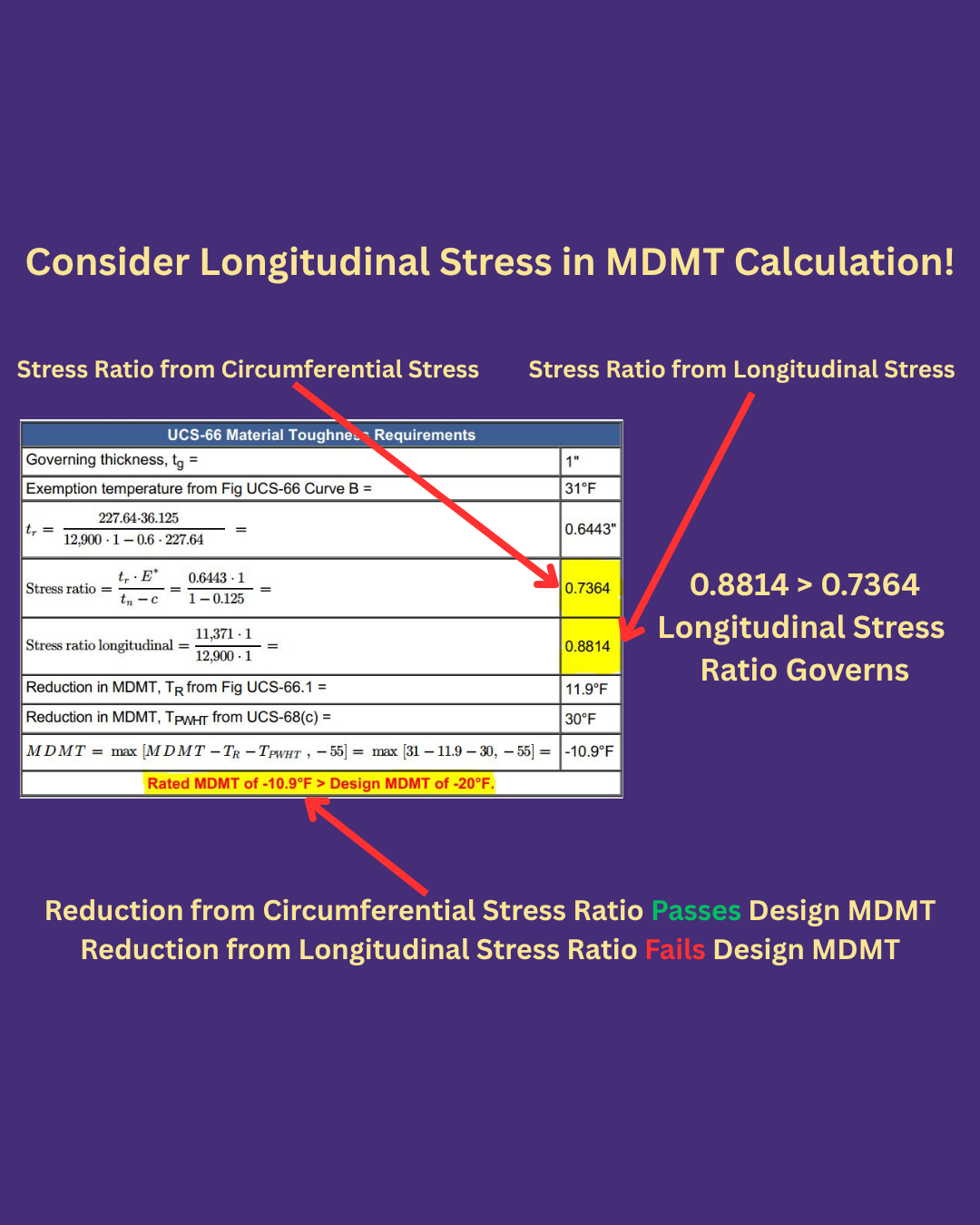
Consider Longitudinal Stresses in Brittle Fracture Check
Do you consider longitudinal stresses when you check for brittle fracture?
I’ve had a lot of people asking me to check their hydrotest temperatures. A design where a governing longitudinal stress case was not considered in the Minimum Design Metal Temperature (MDMT) stood out to me.
Did you know that longitudinal stresses can govern the MDMT even if circumferential stresses govern the Maximum Allowable Working Pressure (MAWP)? Not checking the longitudinal stresses can lead to devastating results as the brittle mode of failure is swift and catastrophic. Always remember to consider longitudinal stresses in your brittle fracture check.

Check Water Temperature Before Hydrotest
Please check the water temperature before performing your hydrotest. It may be too cold!
Have you ever seen a pressure vessel or heat exchanger crack due to brittle fracture during hydrostatic testing? Thousands of hours spent on calculations, drawings, welds, and inspections down the drain. Then the root cause investigation results in more time and money lost.
Brittle fracture can occur during hydrostatic testing when the water temperature used in the hydrotest is too close to the Minimum Design Metal Temperature (MDMT) of the material. This means that your equipment can pass the design MDMT calculations and still experience brittle fracture during hydrostatic testing. This simple temperature check is often missed and can lead to devastating results.
Please review UG-99 for more information regarding hydrostatic testing.

High Tube Bundle Replacement MDMT
A Minimum Design Metal Temperature (MDMT) of 100°F (38°C) for a brand new heat exchanger tube bundle installation?
How is this even possible?
I see these in service all the time when an Owner/Operator does not pay attention to the MDMT when replacing carbon steel tube bundles in heat exchangers with an original construction date prior to 1987. The MDMT calculation was not performed on these old tube bundles as they predate the MDMT calculation in the ASME Code.
Many times older exchangers have thick tubesheets constructed with UCS-66 Curve A materials that result in high MDMTs. Pressure-containing equipment with high MDMTs carry a high operational risk as the brittle fracture mode of failure is immediate and catastrophic. Please review the use of UCS-66 Curve A materials in your process. I prefer to upgrade material selection to a UCS-66 Curve C or Curve D material at the next scheduled tube bundle replacement.