Flange Yield Stress Temperature
Does temperature matter for bolting flanges?
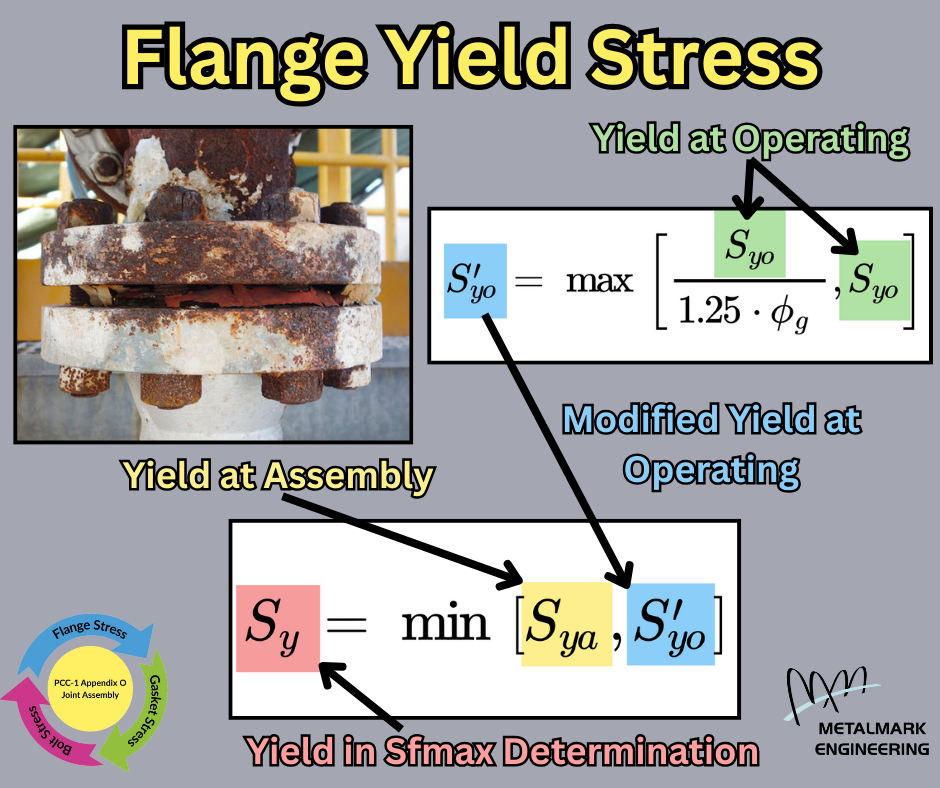
I am often asked which flange yield stress value to use in the ASME PCC-1 Appendix O calculation. On one hand using the ambient air temperature makes perfect sense because it is the temperature the flange is assembled at. On the other hand using the operating temperature makes sense because higher temperatures can significantly lower the yield stress. The fact is that both need to be considered before selecting the Yield Stress (Sy) used in the determination of the Maximum Permissible Bolt Stress before Flange Damage, Sfmax.
The Modified Yield at Operating (S’yo) often governs over the Yield at Assembly (Sya) if:
Fraction of Gasket Load Remaining after Relaxation (ϕg) is close to 1
The the Yield at Operating (Syo) is 12.5% less than the Yield at Assembly (Sya)
This means that flanges with spiral wound gaskets and flanges operating at temperatures much greater than assembly temperature are susceptible to the Modified Yield at Operating (S’yo) governing over the Yield at Assembly (Sya). Please consider both assembly and operating temperatures when selecting the Yield Stress (Sy) used to find Sfmax.