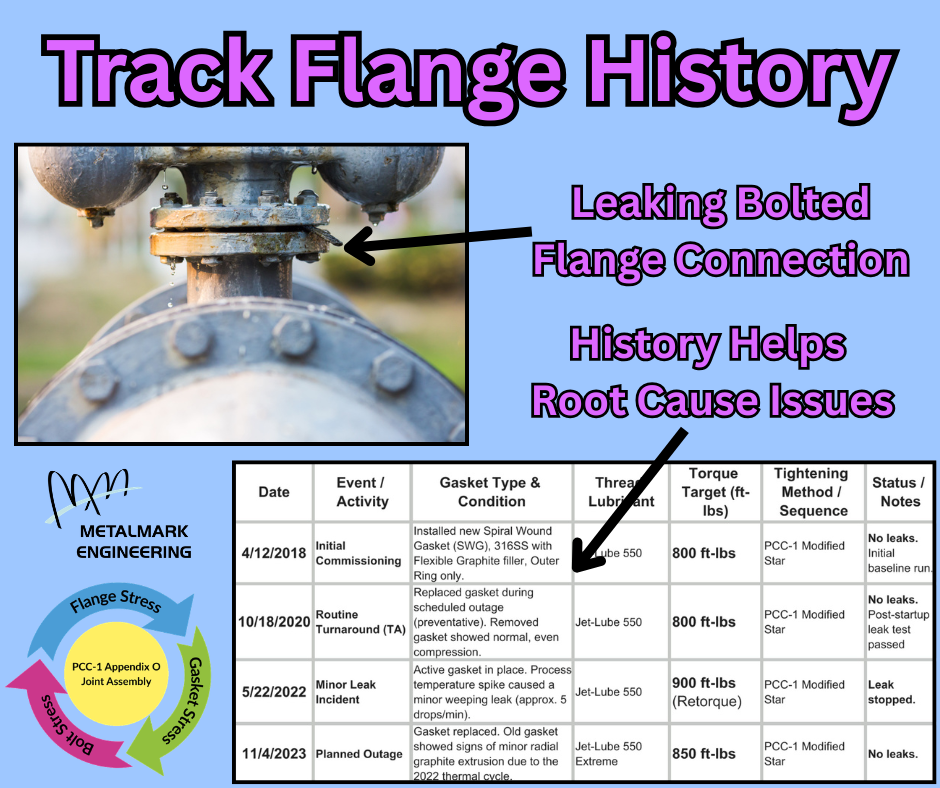
Track Flange History with ASME PCC-1 Appendix R
Do you track the history of the flange pairs in your facility? You should. A well documented history of each bolted flange assembly makes it easier to determine the source of new leaks.
A good flange history also helps prevent new leaks from occurring in the first place, especially during turnarounds. Sometimes it is as simple as not repeating the same mistakes as another assembler. Other times I need the flange history plus the calculation of the gasket, bolt, and flange stresses using PCC-1 Appendix O determine exactly what went wrong during prior assemblies.
As an engineer, I want as much information about the bolted flange assembly as I can get. I want to know everything about the gaskets, the bolts, the lubricant used, the target torque, the tool used, and everything else you can give me. This information helps me make a plan for each flange pair for the turnaround. Having the flange history in one convenient place makes sense.
Not tracking the flange pairs in your facility? Send me a message because your next turnaround is a great time to start.
Check out ASME PCC-1 Appendix R for more information regarding Assembly Records Management.